Eramet

France

Geology
ISATIS.py
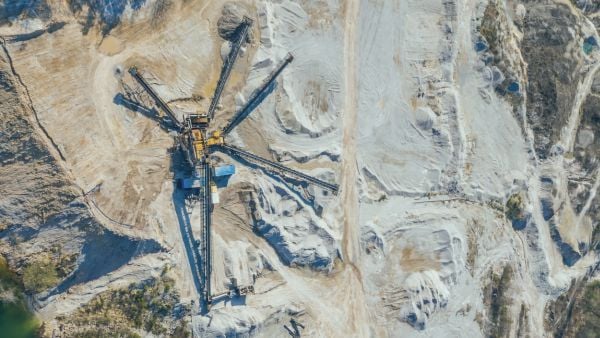
Eramet is a leading international mining player, specialized in the extraction and processing of critical metals for the energy transition (manganese, nickel, lithium, etc.). Present in more than 20 countries, the group relies on innovation to optimize its processes and contribute to the development of a more sustainable mining industry.
Before adopting Isatis.py Python geostatistics library, resource estimation at Eramet relied on a legacy of Isatis batch processes, later Isatis.neo, and various Python scripts often customized by each geologist.
This approach had several limitations:


After a phase of comparative testing of different Python libraries, including both open-source and proprietary solutions, Eramet chose Isatis.py.
Why Isatis.py? Four key reasons:


The library is encapsulated within an internal platform with a web interface. Geologists no longer handle code directly; they only enter the key parameters (such as variograms and neighborhood). The entire estimation logic is industrialized within a configurable and automated workflow, with automatic generation of figures and analysis files. The core of the process remains invisible, but fully controlled.


By centralizing estimations around a single, configurable, and documented script, Eramet drastically reduces the risk of human error and eliminates methodological inconsistencies. Each run maintains a complete history of parameters, input data, and generated results, ensuring rigorous traceability and transparency. This approach ensures homogeneous, reliable, and auditable estimates while accelerating updates in production contexts.
The goal is set: to generalize the use of standardized workflows for a unified and controlled resource management.
 Production
RECONCILOR
Production
RECONCILOR
The successful integration of Reconcilor and LiveMine has provided significant benefits to Bellevue.
 Planning
DATABLAST
Planning
DATABLAST
Designed specifically by professionals in the industry, DataBlast enables operational improvement through its integrated and comprehensive design capabilities.
 Сonsulting
Peabody identified gaps within their operations and improved their overall technical capacity with Datamine's consultants.
 Geology
Studio RM
Geology
Studio RM
See how corporate resource and reserve information with the quality, accuracy, and reliability required by geologists is delivered with Studio RM.
 Laboratories
CCLAS
Laboratories
CCLAS
Enhanced automation and streamlined data tracking empowered Rio Tinto to optimise operations, saving up to one month annually in manual efforts.
 Geology
Minescape Geology
Geology
Minescape Geology
Achieving over 95% accuracy in a complex historical mining district with the MineScape mine planning model.
 Exploration
Discover
Exploration
Discover
As part of the improvements since the implementation of this solution, the processing time of data is much shorter.
 Production
PRODUCTION
ACCOUNTING
Production
PRODUCTION
ACCOUNTING
With Datamine's Production Accounting, data sources are transparent, they are recorded and stakeholders know where the data came from.
 Geology
ISATIS.NEO
Geology
ISATIS.NEO
Geological domaining is a crucial step in the resource modelling process. See how our solution can streamline this process.
 Production
SCENARIO
Production
SCENARIO
See why Whitehaven Coal has expanded their use of Scenario from selected pilot projects to their entire portfolio.
 Produção
RECONCILOR
Produção
RECONCILOR
A integração bem-sucedida do Reconcilor e LiveMine trouxe benefícios significativos para a Bellevue.
Laboratories
CCLAS
Discover how a leading mining and metals company in South Africa transformed its laboratory operations with Datamine’s CCLAS solution.
Laboratories
CCLAS
Enhancing laboratory operations with Datamine's CCLAS at a top-tier iron ore and lithium operator.
 Laboratories
CCLAS
Laboratories
CCLAS
Öksüt Gold Mine, operated by Centerra Gold in Turkey, partnered with Datamine to implement CCLAS — a mining-specific LIMS.
 Geology
ISATIS.py
Geology
ISATIS.py
Eramet chose Isatis.py, Geovariances’ Python geostatistics library, to standardize, secure, and industrialize resource estimation across dozens of mining sites. The scalable web platform delivers faster, reproducible, error‑reduced workflows with full traceability and seamless Isatis.neo integration.
 Production
MINEMARKET
Production
MINEMARKET
GAC automated their systems and transformed their operations with MineMarket, saving over 60 labour-hours every day and enabling real-time inventory visibility from pit to port.
 Production
MINEMARKET
Production
MINEMARKET
Iron Ore Producer Transforms Inventory Management with MineMarket.
 Exploration
Fusion
Exploration
Fusion
Integrated GDMS Fusion solution enabled Nexa Resources to centralise and standardise geological data management across Brazil, Peru, and Namibia, ensuring secure, real-time access, improved data quality, and streamlined operations
 Geology
ISATIS.NEO
Geology
ISATIS.NEO
Faced with sparse drilling data in the northern extension of its Rodoretto talc mine, Imerys leveraged the advanced simulation capabilities of Isatis.neo, first using multiple-point statistics (MPS) and then plurigaussian simulations (PGS), to model lithologies and grades, with methodological support from Geovariances.
 Laboratories
CCLAS
Laboratories
CCLAS
Minera Florida partnered with Datamine to replace its legacy system with CCLAS, ensuring accurate, timely, and traceable results that support compliance, reporting, and production quality.
 Geology
Minescape Geology
Geology
Minescape Geology
MineScape improved forecasts, boosted recovery, cut costs, and prevented delays by identifying and planning for adverse roof conditions.
 Exploration
LandTrack
Laboratories
CCLAS
Exploration
LandTrack
Laboratories
CCLAS
Rio Tinto Yarwun modernised its laboratory operations by replacing a legacy LIMS with CCLAS, improving data reliability, streamlining workflows, and ensuring seamless integration with plant systems, without disrupting production.
 Exploration
Discover
Exploration
Discover
Frontier Lithium adopted Discover for ArcGIS and Discover Mobile to replace manual workflows and improve mining exploration. What began as drillhole visualisation became a core platform for exploration, engineering and community engagement.
 Laboratories
CCLAS
Laboratories
CCLAS
Hengjaya Mineralindo partnered with Datamine to standardise high-volume laboratory workflows with CCLAS, improving data reliability, traceability, and reporting for operational decisions.
 Production
RECONCILOR
Production
RECONCILOR
Utilising best practice with Reconcilor enabled Evolution Mining to improve operational outcomes, meaning reduced processing time, improved data validation and accuracy, significantly improved stockpile balancing and easy comparison between variables.
 Laboratories
CCLAS
Laboratories
CCLAS
Kamoa Copper transformed its smelter laboratory with Datamine CCLAS, moving from manual, paper-based workflows to a digitally integrated environment with automated sample registration, validation, reporting, and real-time data flow into operational systems.
 Laboratories
CCLAS
Laboratories
CCLAS
Akara Resources implemented Datamine's CCLAS to create a seamless laboratory-to-geology data workflow. Through integration with laboratory instruments, downstream systems, and Datamine Fusion, the company improved data reliability, reduced manual effort, and ensured timely access to critical assay information.
 Exploration
Fusion
Exploration
Fusion
GCO’s geology team is tasked with managing complex exploration and grade control processes, conducting extensive reverse circulation (RC) drilling across sand dunes.