
English

EMEA

Planning

Studio NPVS, Studio NPVS+
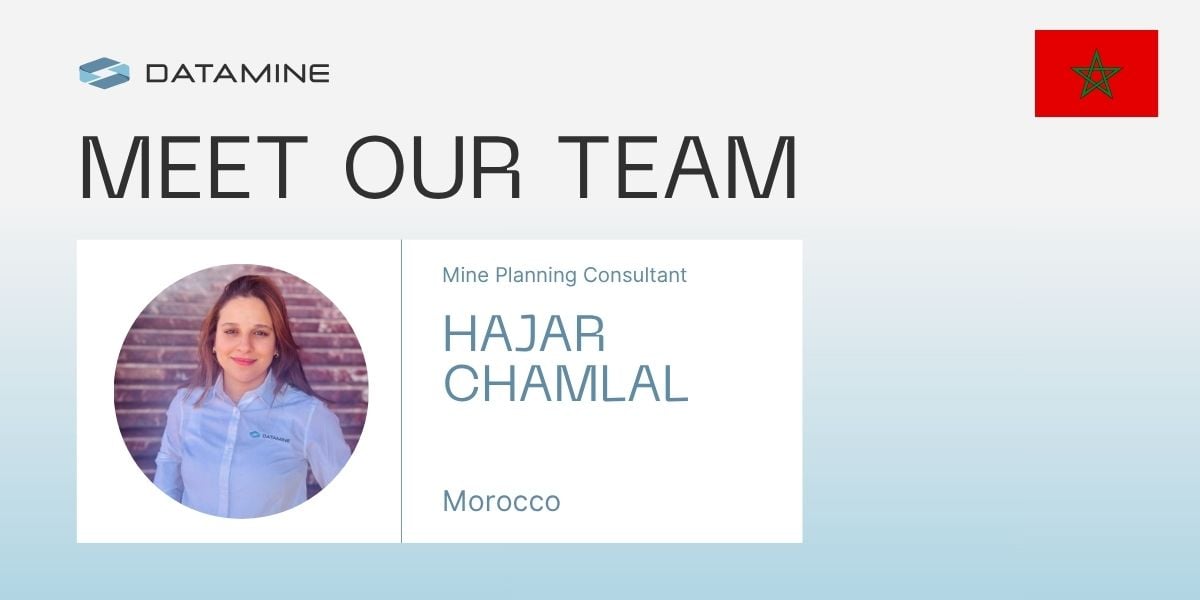
During an internship at the Ministry of Mines in Morocco, I was primarily involved in legislation, but I found myself deeply curious about the operational side of mining. That experience was the starting point of my passion for the mining sector.
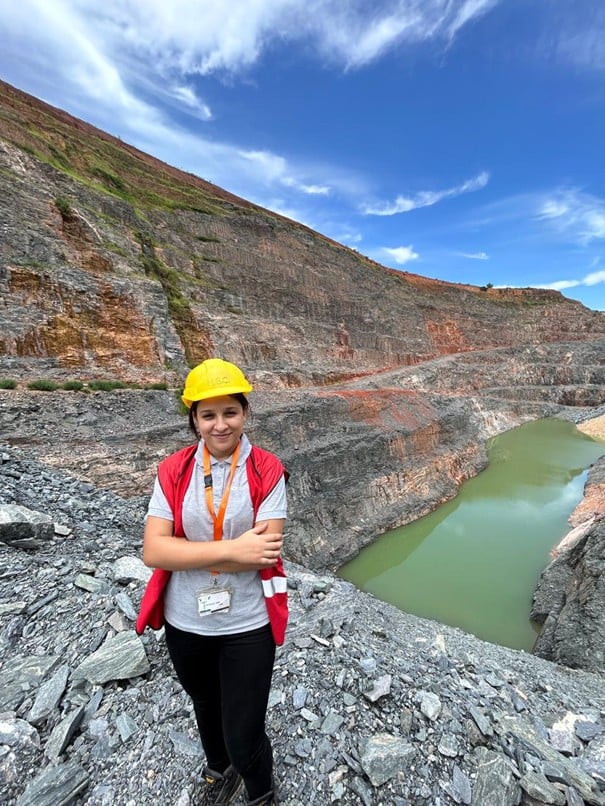
I began with two years of preparatory studies in physics and science, followed by admission to the Rabat School of Mines, where I specialized in ground and underground mining operations. For my final-year project, I joined Managem to work on mine planning. After graduating as a mining engineer, I joined Datamine as a Mining Analyst while simultaneously starting a PhD in mineral processing at UM6P. A year later, I became a Mine Planning Consultant, and I now also serve as a Project Manager for Centric in the West North Africa region.
Absolutely. When I began delivering training at mine sites, I discovered a new side of myself—an ambitious and passionate educator. Sharing knowledge with professionals and learning alongside them confirmed that I was exactly where I belonged.
I specialize in mine planning for underground operations and also consult in geology. My role involves providing strategic consulting and training on mining software to optimize planning, design, and resource estimation.
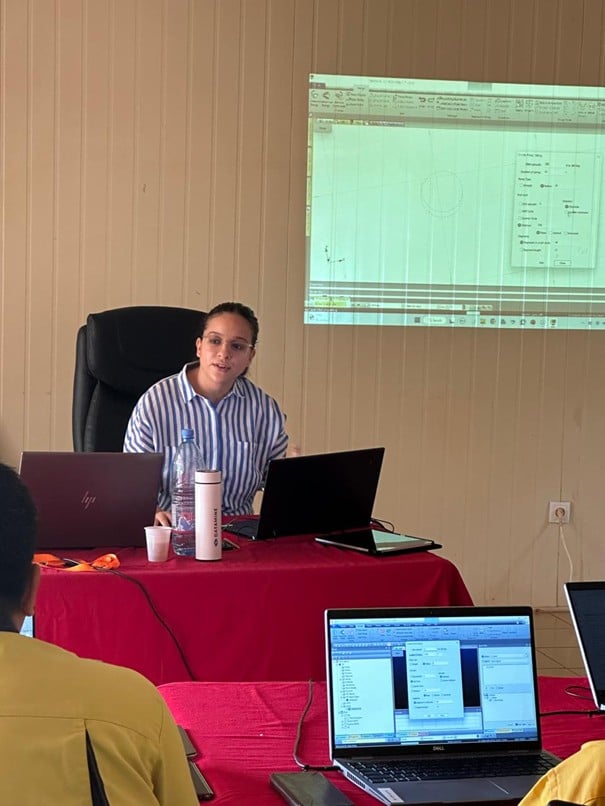
I teach software tools that help mining engineers estimate mineral resources, design underground infrastructure, and develop efficient and profitable mine plans based on suitable mining methods.
I teach software that helps the engineers to first calculate an estimate their ressources and then design the mine infrastructure and optimise the block model to rentable block to mine and plan based on a mining method
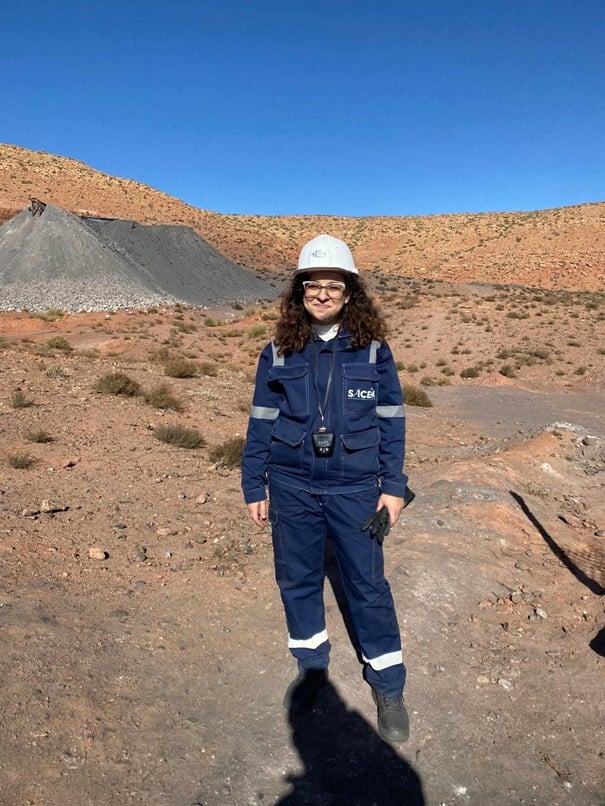
I truly enjoy traveling and visiting mine sites across different countries. Each site brings a new challenge, culture, and learning experience, which keeps my work exciting and rewarding.
One project that best represents my expertise is my ongoing work on the geological modelling of phosphate deposits. The objective of the project is to develop robust and accurate geological models that support resource estimation, mine planning, and operational decision-making across large-scale sedimentary phosphate deposits.
I am responsible for the geological modelling workflow from data preparation through model validation and delivery
One of the primary challenges is modelling large, laterally extensive sedimentary deposits while maintaining geological consistency across vast areas and multiple datasets
The geological model provides a reliable and centralized representation of the deposit, improving confidence in resource evaluation and mine planning decisions. By delivering a consistent geological framework, the model helps different technical teams work from the same interpretation of the deposit.
 How does this project experience influence the way you support Datamine customers today?
 It enables me to understand customer requirements from both a technical and operational perspective. This allows me to provide guidance that goes beyond software functionality and focuses on helping customers achieve accurate, efficient, and defensible geological modelling workflows that support business objectives and mine planning decisions.
The mining industry in my country is male-dominated, and there are many prejudices against women. You can face challenges like being perceived as ‘overly groomed’ or ’emotional,’ and being seen as less competent in technical roles. Despite these perceptions, I proved myself and earned a position in the industry. This is a truly significant professional achievement for me.
I recently started working on projects using our database software, in addition to resource modeling and GIS software. I had no background in SQL at first, so learning it from scratch was tough — but I’ve made great progress!
I entered the industry at a time when digital transformation was gaining momentum. I’ve embraced this shift fully by learning and applying cutting-edge software and promoting digital tools for smarter mining.
Be patient and open to continuous learning. Mining is complex and technical, and understanding it takes time. Stay curious and ambitious—it pays off.
The desire to keep learning and discovering. Mining is a dynamic field where no two days are alike, and that constant evolution keeps me inspired.
I would pursue a career that keeps me active and out in the field—something hands-on and engaging, far from a typical 9-to-5 desk job.
That mining is not suitable for women. That’s simply not true. Women are thriving in all areas of the industry, from engineering to leadership.
The digitalization of mines and the growing emphasis on environmental assessment and sustainability. These shifts are not only modernizing operations but also making mining more responsible and future-ready.
 Production
RECONCILOR
Production
RECONCILOR
The successful integration of Reconcilor and LiveMine has provided significant benefits to Bellevue.
 Planning
DATABLAST
Planning
DATABLAST
Designed specifically by professionals in the industry, DataBlast enables operational improvement through its integrated and comprehensive design capabilities.
 Сonsulting
Peabody identified gaps within their operations and improved their overall technical capacity with Datamine's consultants.
 Geology
Studio RM
Geology
Studio RM
See how corporate resource and reserve information with the quality, accuracy, and reliability required by geologists is delivered with Studio RM.
 Laboratories
CCLAS
Laboratories
CCLAS
Enhanced automation and streamlined data tracking empowered Rio Tinto to optimise operations, saving up to one month annually in manual efforts.
 Geology
Minescape Geology
Geology
Minescape Geology
Achieving over 95% accuracy in a complex historical mining district with the MineScape mine planning model.
 Exploration
Discover
Exploration
Discover
As part of the improvements since the implementation of this solution, the processing time of data is much shorter.
 Production
PRODUCTION
ACCOUNTING
Production
PRODUCTION
ACCOUNTING
With Datamine's Production Accounting, data sources are transparent, they are recorded and stakeholders know where the data came from.
 Geology
ISATIS.NEO
Geology
ISATIS.NEO
Geological domaining is a crucial step in the resource modelling process. See how our solution can streamline this process.
 Production
SCENARIO
Production
SCENARIO
See why Whitehaven Coal has expanded their use of Scenario from selected pilot projects to their entire portfolio.
 Produção
RECONCILOR
Produção
RECONCILOR
A integração bem-sucedida do Reconcilor e LiveMine trouxe benefícios significativos para a Bellevue.
Laboratories
CCLAS
Discover how a leading mining and metals company in South Africa transformed its laboratory operations with Datamine’s CCLAS solution.
Laboratories
CCLAS
Enhancing laboratory operations with Datamine's CCLAS at a top-tier iron ore and lithium operator.
 Laboratories
CCLAS
Laboratories
CCLAS
Öksüt Gold Mine, operated by Centerra Gold in Turkey, partnered with Datamine to implement CCLAS — a mining-specific LIMS.
 Geology
ISATIS.py
Geology
ISATIS.py
Eramet chose Isatis.py, Geovariances’ Python geostatistics library, to standardize, secure, and industrialize resource estimation across dozens of mining sites. The scalable web platform delivers faster, reproducible, error‑reduced workflows with full traceability and seamless Isatis.neo integration.
 Production
MINEMARKET
Production
MINEMARKET
GAC automated their systems and transformed their operations with MineMarket, saving over 60 labour-hours every day and enabling real-time inventory visibility from pit to port.
 Production
MINEMARKET
Production
MINEMARKET
Iron Ore Producer Transforms Inventory Management with MineMarket.
 Exploration
Fusion
Exploration
Fusion
Integrated GDMS Fusion solution enabled Nexa Resources to centralise and standardise geological data management across Brazil, Peru, and Namibia, ensuring secure, real-time access, improved data quality, and streamlined operations
 Geology
ISATIS.NEO
Geology
ISATIS.NEO
Faced with sparse drilling data in the northern extension of its Rodoretto talc mine, Imerys leveraged the advanced simulation capabilities of Isatis.neo, first using multiple-point statistics (MPS) and then plurigaussian simulations (PGS), to model lithologies and grades, with methodological support from Geovariances.
 Laboratories
CCLAS
Laboratories
CCLAS
Minera Florida partnered with Datamine to replace its legacy system with CCLAS, ensuring accurate, timely, and traceable results that support compliance, reporting, and production quality.
 Exploration
LandTrack
Laboratories
CCLAS
Exploration
LandTrack
Laboratories
CCLAS
Rio Tinto Yarwun modernised its laboratory operations by replacing a legacy LIMS with CCLAS, improving data reliability, streamlining workflows, and ensuring seamless integration with plant systems, without disrupting production.
 Exploration
Discover
Exploration
Discover
Frontier Lithium adopted Discover for ArcGIS and Discover Mobile to replace manual workflows and improve mining exploration. What began as drillhole visualisation became a core platform for exploration, engineering and community engagement.
 Laboratories
CCLAS
Laboratories
CCLAS
Hengjaya Mineralindo partnered with Datamine to standardise high-volume laboratory workflows with CCLAS, improving data reliability, traceability, and reporting for operational decisions.
 Production
RECONCILOR
Production
RECONCILOR
Utilising best practice with Reconcilor enabled Evolution Mining to improve operational outcomes, meaning reduced processing time, improved data validation and accuracy, significantly improved stockpile balancing and easy comparison between variables.
 Laboratories
CCLAS
Laboratories
CCLAS
Kamoa Copper transformed its smelter laboratory with Datamine CCLAS, moving from manual, paper-based workflows to a digitally integrated environment with automated sample registration, validation, reporting, and real-time data flow into operational systems.
 Laboratories
CCLAS
Laboratories
CCLAS
Akara Resources implemented Datamine's CCLAS to create a seamless laboratory-to-geology data workflow. Through integration with laboratory instruments, downstream systems, and Datamine Fusion, the company improved data reliability, reduced manual effort, and ensured timely access to critical assay information.


