



Isatis.neo 2026.1 introduces practical enhancements across data exchange, data preparation, statistical analysis, interpolation workflows, simulation review, and result visualisation. This release focuses on making everyday geostatistical workflows more flexible, transparent, and easier to review.
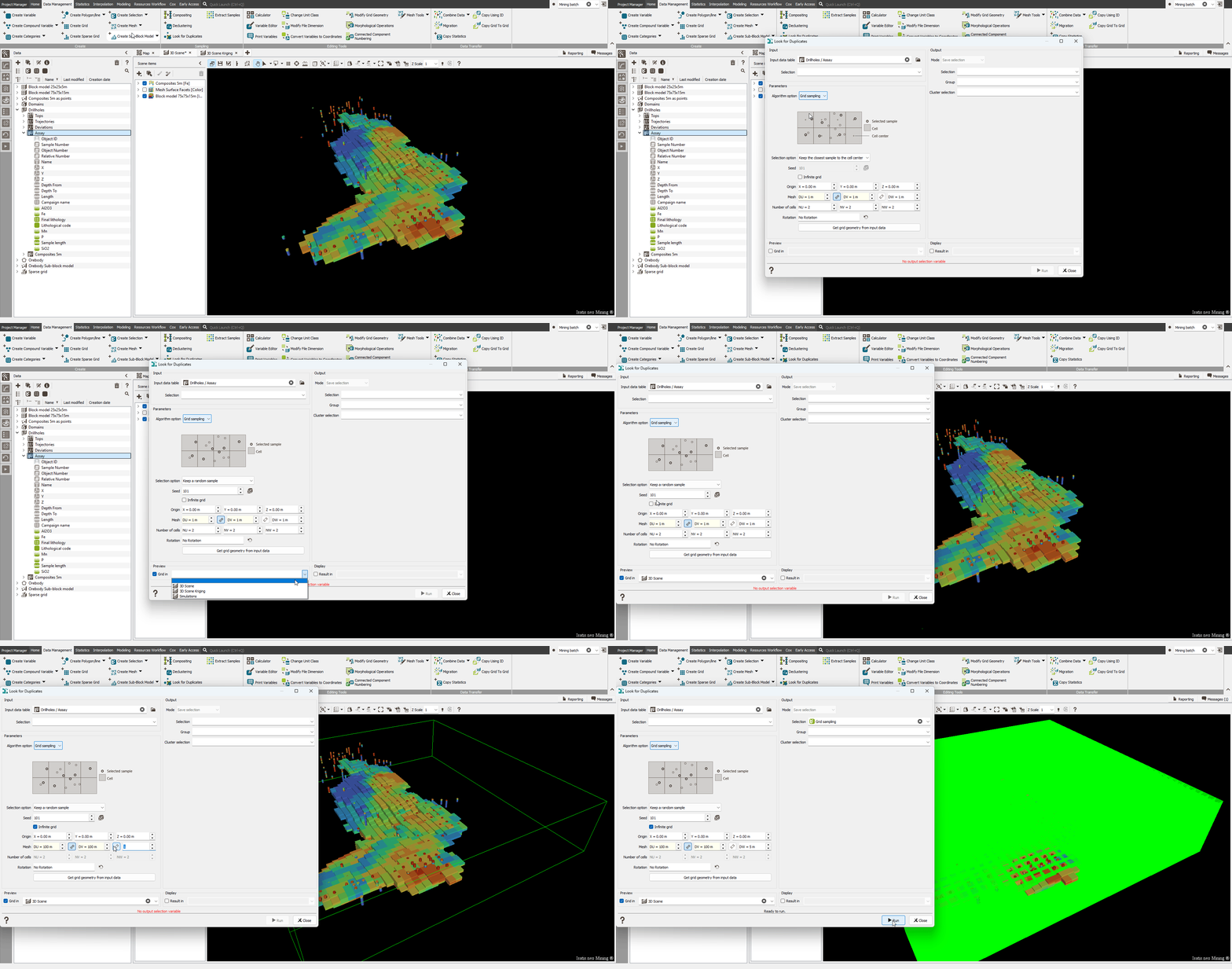
Data exchange is now more complete and reliable, with enhanced polygon export to OGR formats, support for GeoJSON, and the ability to export associated variables along with geometry. Vulcan import and export workflows also gain a coordinate unit selector, allowing Isatis.neo to automatically apply the required coordinate and block-size conversions when exchanging files that do not store unit information. On the data preparation side, the Look for Duplicates task now includes a new Grid sampling algorithm, helping users thin dense datasets by keeping at most one sample per cell of a regular virtual grid.
Preparation and analysis workflows are also easier to control. In compositing, a new Uniform composite residual spreading mode can redistribute intervals evenly to produce strictly uniform composite lengths and more consistent support for downstream estimation. In Cross plot, iso-frequency classes for the Conditional Expectation Curve provide a more balanced view of the relationship between variables when the data distribution is uneven.
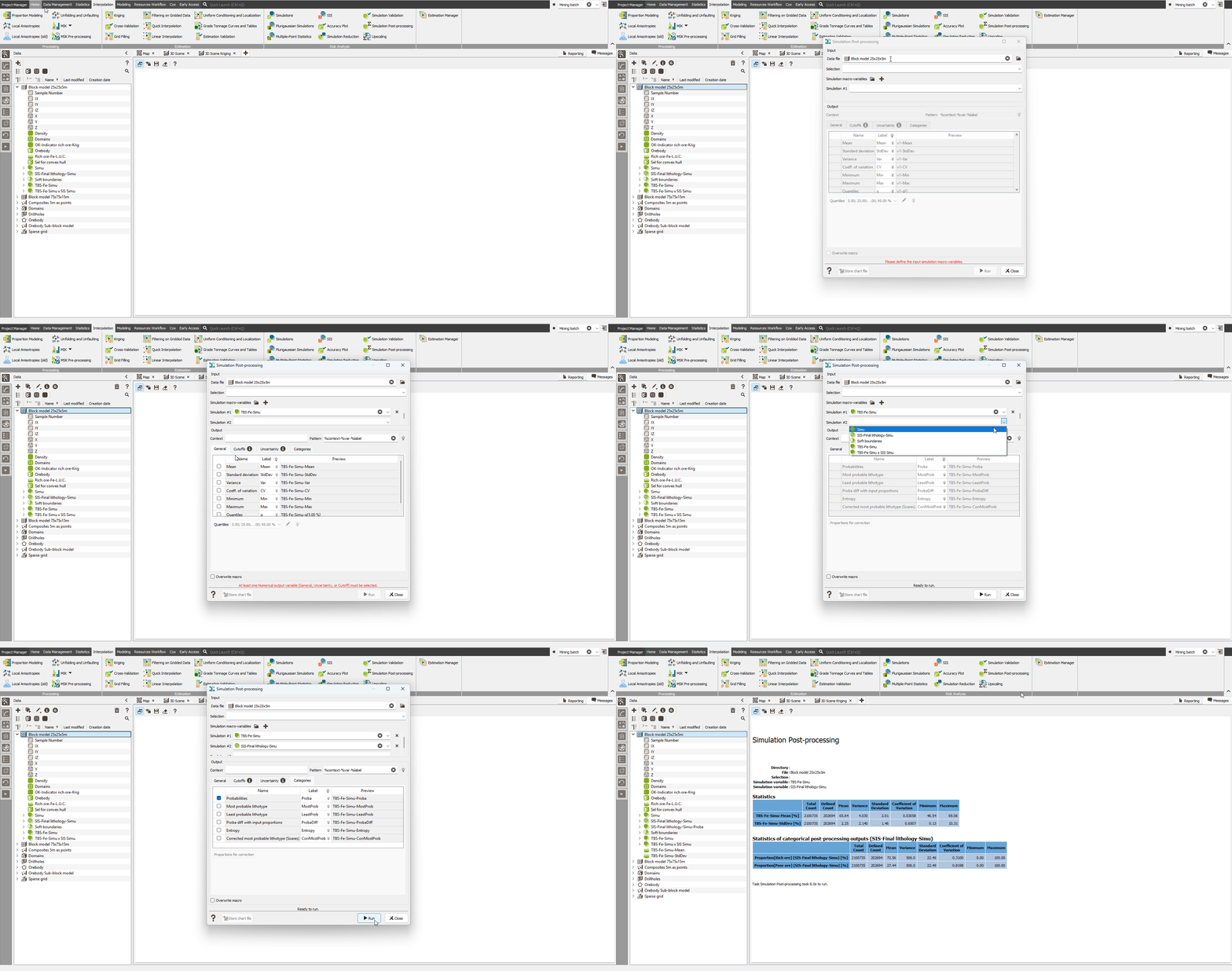
Interpolation and simulation workflows gain several useful additions. Quick Interpolation can now save interpolation weights, making it easier to review how estimates are supported, while a new Use simple kriging option in Kriging and Simulations provides more flexibility when working with strictly stationary models and known mean assumptions. Simulation review is also extended with categorical simulation post-processing, including category probabilities, most probable and least probable categories, probability difference, entropy, and the Soares uncertainty criterion.
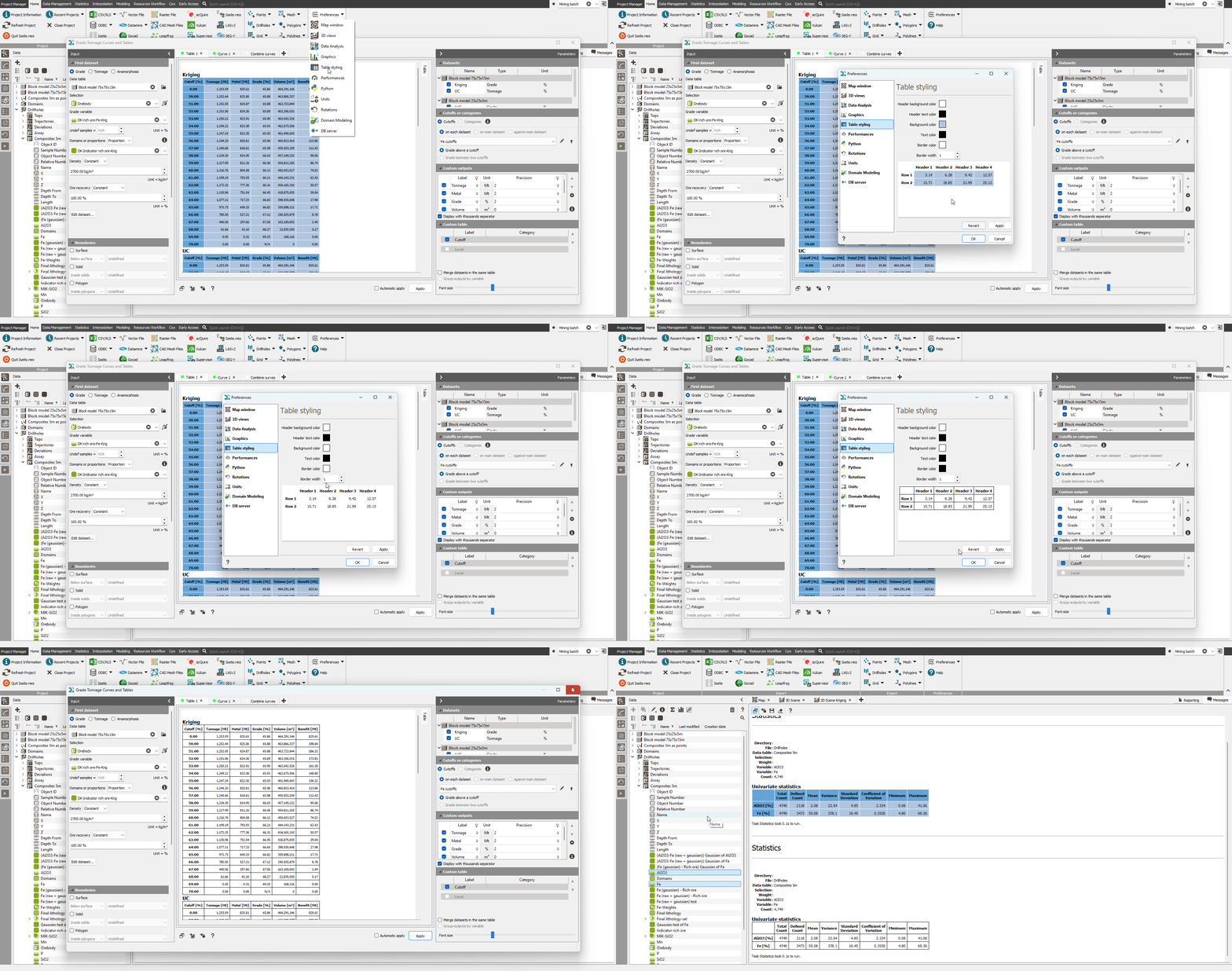
Finally, table readability is now easier to tailor to project and reporting needs. New Table Styling preferences let users define default colours and borders for tables displayed across Isatis.neo, including statistics shown in the Messages window and task result panels. With a live preview available in the preferences, users can adjust table appearance before applying the settings.
About Isatis.neo
Isatis.neo is a sophisticated solution offering unmatched flexibility for geostatisticians and mineral resource estimation geologists. It provides a wide range of statistical and geostatistical tools designed to efficiently achieve precise resource estimations while addressing unique project challenges. Automatic parameter settings streamline processes, while advanced users can modify parameters for greater precision and control. Its intuitive interface, combined with cutting-edge parallelised algorithms, ensures both ease of use and high-performance computing. With Python integration for enhanced extensibility and batch processing capabilities that guarantee traceability and reproducibility, Isatis.neo enables seamless adaptation to various configurations and empowers users to customise their workflows with confidence.
Want to know more?
Learn more about Datamine’s portfolio of software for Geology.
Reach out to the Isatis.neo team via our contact form.
Read Isatis.neo release notes and documentation.
Datamine enables efficient and sustainable mining through the application of world-leading technology and services. Read about our solutions.

